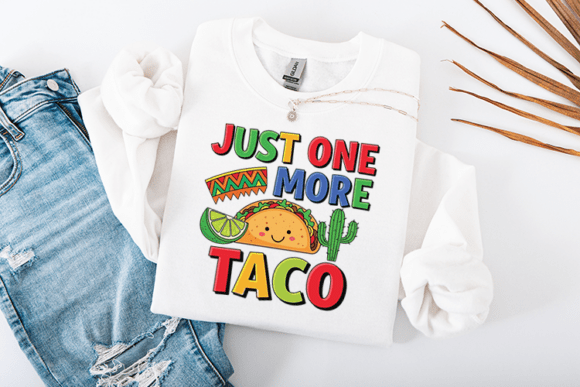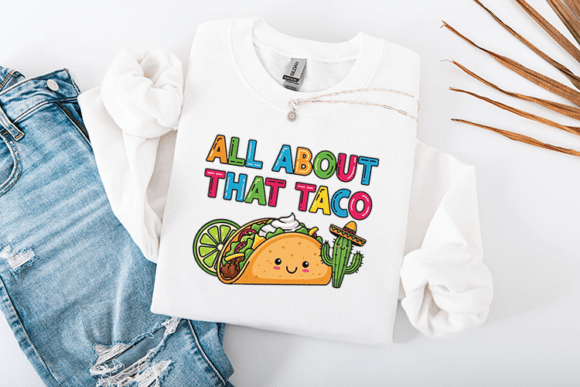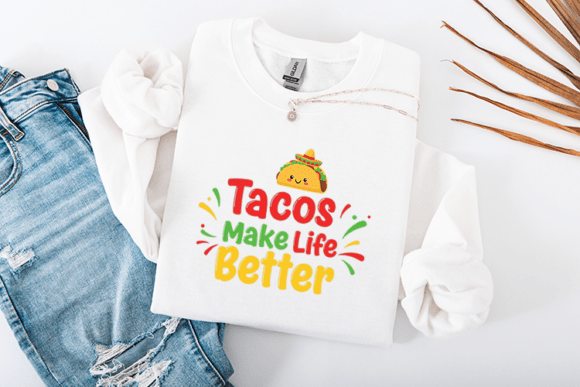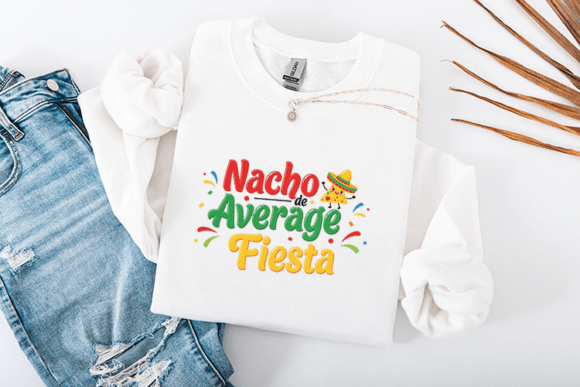
Tacos Before Amigos Funny Fiesta Food Review
As a designer who has spent years navigating the intersection of digital graphics and physical thread, I approach every new machine embroidery design with a critical eye. The market is flooded with assets that look great on a screen but fall apart under the needle. When I first opened the Tacos Before Amigos Funny Fiesta Food file, I was immediately drawn to its vibrant energy. This isn't just another generic food graphic; it is a bold statement piece designed for those who prioritize flavor over friendship, at least in jest. The combination of playful typography and a cute taco illustration creates an instant mood of celebration and fun. For anyone running a craft business or looking to add a splash of personality to their handmade products, this design offers a compelling starting point.
First Impressions: Visual Weight and Layout
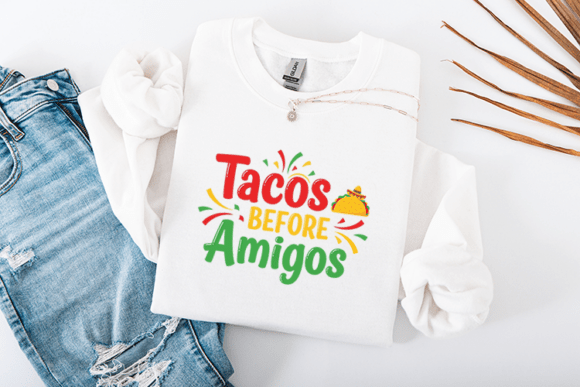
The layout of Tacos Before Amigos Funny Fiesta Food is striking because of its balance between text and imagery. The bold colorful typography anchors the design, ensuring the message is read before the eye drifts to the festive elements surrounding the taco. In the world of Graphics, clarity is king, especially when translating vector art into stitch data. At 12 x 12 inches and 3600 x 3600 pixels, the resolution is robust enough to handle significant scaling without losing definition. However, as an experienced embroiderer, my first thought is always about how this translates to fabric. The "cute" nature of the taco illustration suggests soft curves and rounded edges, which are generally forgiving in embroidery, but the festive elements might introduce complex corners that require careful digitizing.
When visualizing this as a finished product, the design screams "celebration." It feels perfectly suited for holiday embroidery projects, Cinco de Mayo specials, or simply adding a pop of humor to everyday wear. The visual personality is confident and loud, meaning it will likely dominate whatever surface it is placed upon. This makes it an excellent choice for items where the design is the hero, such as a tote bag design or the back of a sweatshirt.
Real-World Application: From File to Fabric
Let's talk about a real-life scenario. Imagine you are preparing a custom embroidered tote bag for a local boutique or an Etsy listing targeting foodies. You want something that stands out in a crowded marketplace. Using Tacos Before Amigos Funny Fiesta Food here could be a game-changer. The large scale allows the design to cover a significant portion of the canvas, making the tote bag instantly recognizable. The bold colors would pop against natural cotton or denim, creating a high-contrast look that photographs beautifully for your printable mockups.
Alternatively, consider a sweatshirt embroidery project. Placing this design on the chest area of a heavy cotton crewneck would create a statement piece perfect for casual Fridays or themed parties. The density of the fill stitch required for the taco and the lettering needs to be managed carefully to avoid puckering on thicker fabrics. If you are creating an embroidered patch from this file, the clean lines of the typography should translate well, provided the stitch density is optimized to prevent the patch from feeling too stiff. For baby embroidery, however, one must be cautious; while the theme is fun, the size of the 12x12 inch original might need resizing down significantly, which could impact the legibility of the smaller festive details.
Navigating Technical Challenges
While the potential is high, there are specific areas where Tacos Before Amigos Funny Fiesta Food requires careful handling. Small hoop sizes are a definite no-go if you want to preserve the integrity of the entire composition. Trying to cram this design into a 4x4 hoop will force you to cut the image into sections, breaking the flow of the "Tacos Before Amigos" phrase and potentially ruining the visual impact. Always confirm your hoop size before committing to a project.
Fabric texture also plays a crucial role. On textured fabrics like terry cloth or heavy wool, the intricate details of the festive elements might get lost. The design relies on crisp lines for the typography, so using it on stretchy fabric without the proper stabilizer could lead to distortion. Similarly, dark fabric presents a challenge; the bold colorful thread colors need to be selected with care to ensure they don't blend into the background. A white underlay is non-negotiable here to make the colors sing.
Curved surfaces, such as caps, are another area for caution. The horizontal flow of the text might warp awkwardly around the crown of a hat unless the digitizer has specifically engineered the arcs for that application. Tiny lettering within the festive accents could also become illegible if the design is scaled down too much for a small item like a keychain or a pocket square.
Strategic Advice for Designers and Sellers
For the Etsy seller or small shop owner, the value of this design lies in its commercial appeal. It taps into a universal love for tacos and humor, making it highly giftable. However, professionalism is key. Before selling any finished product, test the design on scrap fabric first. Check the thread color contrast to ensure the message is readable from a distance. Review the stitch density to avoid excessive bulk, which can make a garment uncomfortable.
Inspect small details closely after stitching. Sometimes, what looks like a solid line on the screen becomes a series of disconnected running stitches if the digitizing isn't tight. Test the design in black and white mockups to see if the shape holds up without color distraction. Compare light and dark fabric backgrounds to determine the best use cases for your inventory. Use proper stabilizer appropriate for the fabric weight to ensure the finished product lays flat.
Finally, always check whether the design works for both personal and commercial projects. Confirm licensing before selling finished items or digital products. As an asset in your Crafts library, Tacos Before Amigos Funny Fiesta Food is a versatile tool, but like any tool, its success depends on how skillfully you wield it. By respecting the technical limitations and leveraging the strong visual identity of the design, you can create high-quality, engaging products that customers will love to wear and display.